Wine Profile
-
Style: Full-bodied herb wine
-
Colour: Pale gold to deep golden amber
-
Body: Medium to full
-
Sweetness: Dry to off-dry
-
Acidity: Medium
-
Alcohol: 11.5–12.5% ABV
-
Yield: Approximately 1 UK gallon (4.5 L), around 6 × 750 ml bottles
-
Difficulty: Intermediate
Herb Character
-
Dominant Flavours: Honey, green apple, vanilla, light spice, gentle woodland notes
-
Aroma Strength: Medium
-
Recommended Brewing Strength: Medium
-
Best Drinking Age: Long-aged (12–48 months)
Harvest Calendar
-
Harvest Season: Late April – Early June (UK)
-
Best Picking Time: Newly emerged young leaves, still soft and bright green
-
Suitable for Fresh Use: ✔ Yes
-
Suitable for Drying: ✔ Yes
-
Suitable for Freezing: ✔ Yes
-
Best Source: Healthy oak trees growing away from roadsides, industrial areas and agricultural spraying
Identification & Safety
Correct identification
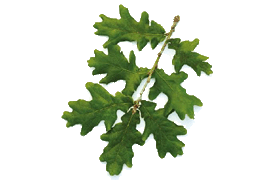
This recipe is suitable for the common British oaks:
Characteristics include:
-
Lobed leaves with rounded tips
-
Soft, bright green spring growth
-
Strong woody branches
-
Acorns developing later in the season
Similar species
Other oak species are generally suitable, although English and Sessile Oak have the longest history in British country winemaking.
Avoid collecting from ornamental trees treated with pesticides.
Which parts should be used?
✔ Young spring leaves only.
These contain softer tannins and produce a smoother wine.
Never use
-
Mature leathery leaves
-
Diseased or insect-damaged leaves
-
Leaves contaminated by pollution
-
Acorns or bark for this recipe
Best Leaves to Use
Choose leaves that are:
Older leaves produce excessive tannin and bitterness.
Ingredients
-
Approximately 250–300 g young oak leaves (loosely packed, around 4 litres)
-
2.0–2.25 lb (900 g–1.0 kg) white sugar
-
Water (to make up to 1 UK gallon (4.5 L))
-
Juice of 2 lemons
-
Juice of 1 orange
-
Finely pared zest of 1 lemon
-
Finely pared zest of 1 orange
-
1 tsp yeast nutrient
-
1 Campden tablet (optional)
-
Wine yeast (half packet recommended):
Optional Ingredients
Preparation
-
Harvest only the young spring leaves.
-
Shake gently to remove insects.
-
Rinse briefly if necessary.
-
Remove coarse stalks.
Young leaves contain considerably softer tannins than mature foliage.
Making the Herbal Infusion
-
Place the leaves into a large saucepan.
-
Pour over approximately 3 litres of boiling water.
-
Simmer gently for 20 minutes.
Avoid prolonged boiling, which can extract excessive bitterness.
-
Strain off the liquid, discarding the leaves.
Only the infusion is fermented.
Making the Must
-
Pour the hot oak leaf infusion into a sanitised fermentation bucket.
-
Dissolve the sugar into the hot infusion.
-
Add the citrus juice and zest.
-
Top up with cool water to reach 1 UK gallon (4.5 L).
-
Allow to cool below 25°C (77°F).
-
Add:
- Cover and leave for 24 hours if Campden was added.
- Add the yeast and stir thoroughly.
Primary Fermentation
-
Ferment for 5–7 days.
-
Stir gently once daily.
-
Maintain 18–22°C.
The infusion develops a pleasant woodland aroma during fermentation.
Transfer to Secondary
-
Siphon carefully into a sterilised demijohn.
-
Fit an airlock.
-
Top up if required.
Secondary Fermentation
Allow fermentation to continue for approximately 4–6 weeks.
Rack whenever sediment reaches around 1–2 cm.
Clearing & Aging
Once fermentation has finished:
Oak leaf wine benefits enormously from bottle aging.
Expected Results
Tips for Better Oak Leaf Wine
-
Pick only young spring leaves.
-
Avoid mature leaves with high tannin levels.
-
D47 yeast develops excellent body and mouthfeel.
-
Citrus balances the natural tannins.
-
Raisins improve texture without masking the leaf character.
-
Give the wine at least one year before opening.
Common Mistakes to Avoid
-
Using mature oak leaves.
-
Boiling the leaves for too long.
-
Picking leaves from roadside trees.
-
Drinking the wine too young.
-
Adding extra tannin unnecessarily.
About Oak Leaf Wine
Oak leaf wine has been part of British country winemaking for centuries. Long before commercial oak barrels became common in home winemaking, country brewers recognised that young oak leaves naturally contributed tannins and structure, producing wines with greater depth and longevity than many other herbal recipes.
Unlike wines made from strongly aromatic herbs, oak leaf wine relies on subtle woodland flavours and its naturally balanced tannin profile. During bottle aging, the wine develops notes of honey, vanilla and green apple while becoming increasingly smooth and refined.
Its excellent ageing potential makes it one of the finest traditional leaf wines in the British home winemaking tradition.
Serving Suggestions
-
Serve lightly chilled (10–12°C)
-
Excellent with roast chicken, turkey and pork
-
Pairs beautifully with mature Cheddar, Gruyère and Comté
-
Complements mushroom dishes and creamy sauces
-
Excellent with apple tart and nut-based desserts
Storage & Aging
-
Improves for up to 5 years
-
Store in a cool, dark place
-
Best drinking window: 2–5 years
-
One of the longest-aging herb wines
Frequently Asked Questions
Does oak leaf wine taste like oak?
Not in the way an oak-aged barrel wine does. Instead, it develops subtle honeyed, woodland and vanilla-like notes with gentle natural tannins.
Can I use mature oak leaves?
No. Mature leaves contain much higher levels of tannin and can make the wine unpleasantly bitter. Always use the soft young leaves of spring.
Can I dry or freeze the leaves?
Yes. Both drying and freezing preserve the leaves well, although fresh spring leaves produce the finest wine.
Why isn't additional tannin needed?
Young oak leaves naturally contain sufficient tannins to give the wine excellent structure and ageing potential.
How long should I age oak leaf wine?
Ideally for at least one year. It continues to improve for several years and is one of the best long-aging wines in the Herbs & Leaves Collection.
|